The Eternal Loom: How Indian Artisans are Weaving Heritage into Global Luxury
Blog Date: 02 Apr, 2026
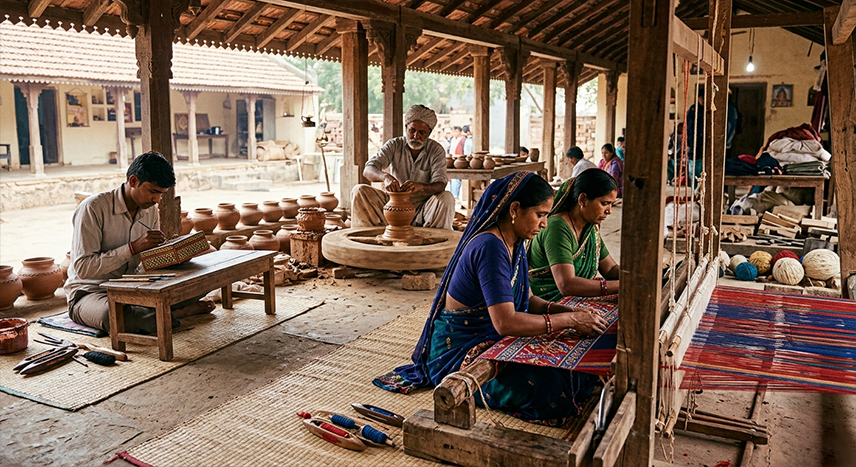
In an era of rapid industrialization and "fast" everything, there exists a silent, powerful resistance in the rural heartlands of India. It is a resistance built not of steel and silicon, but of clay, silk, wood, and metal. For thousands of years, Indian artisans have served as the custodians of a civilization’s soul, passing down secrets of craftsmanship through a rigorous, informal apprenticeship that spans generations.
Today, these traditional skills are no longer just "folk art"—they are the pinnacle of sustainable luxury. As the global market pivots toward authenticity, the world is rediscovering what India has always known: true value lies in the human touch.
The Sacred Thread: Why Heritage Survives
How have these crafts survived the onslaught of the machine age? The answer lies in the social fabric of the artisan community. Craft in India is rarely an individual pursuit; it is a family legacy. A master weaver doesn’t just teach a child how to throw a shuttle; they pass down a philosophy of patience, a reverence for raw materials, and a library of motifs that date back to the Mauryan and Mughal eras.
This continuity is now backed by modern protections like Geographical Indication (GI) tags, which serve as a "passport of authenticity," ensuring that a product’s unique identity—linked to its specific climate, soil, and culture—cannot be replicated by machines.
5 Iconic Masterpieces: From Local Soil to Global Splendor
India’s handicraft portfolio is vast, but these five products represent the zenith of the niche, luxury export market:
1. Pashmina Shawls (Jammu & Kashmir)
Known as "soft gold," authentic Kashmiri Pashmina is hand-combed from the undercoat of the Changthangi goat. It takes months for an artisan to hand-weave a single shawl using needles (Sozni) or looms (Kani). These are not mere garments; they are heirlooms found in the wardrobes of royalty and global connoisseurs.
2. Aranmula Kannadi (Kerala)
The "Aranmula Mirror" is a metallurgical marvel. Unlike glass mirrors, this is made from a secret alloy of tin and copper, polished for weeks to achieve a reflective surface. It is the only mirror in the world that eliminates "secondary reflections." Collectors prize them for their "Vaastu" significance and sheer rarity.
3. Dhokra Metal Craft (Chhattisgarh/Odisha)
Using the "lost-wax casting" technique that dates back 4,000 years to the Indus Valley Civilization, Dhokra artisans create rustic, primitive figurines. Because the mold is broken to retrieve the metal, no two pieces are ever identical. This absolute uniqueness makes them a favorite for high-end interior designers.
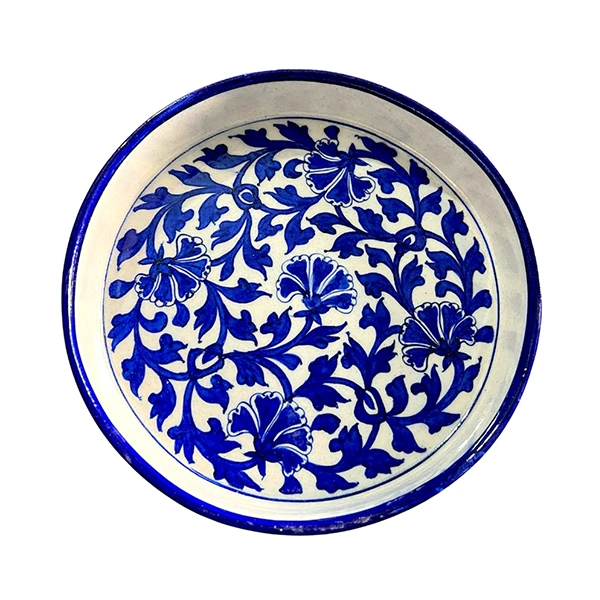
4. Blue Pottery (Rajasthan)
Jaipur’s Blue Pottery is unique because it is the only pottery in the world that does not use clay. Instead, it is made from ground quartz stone, glass, and multani mitti. Hand-painted with cobalt blue and copper oxides, these non-toxic, eco-friendly pieces are staple décor in luxury Mediterranean-themed hotels.
5. Bidriware (Karnataka)
A striking 14th-century art form involving an alloy of zinc and copper blackened with a special soil found only in Bidar Fort. It is then inlaid with pure silver. The contrast of jet black and shimmering silver defines "understated luxury" for high-end corporate gifts and bespoke collectibles.
The Niche Market: Why The Elite Choose Handcrafted
There is a growing "Conscious Class" of consumers—including luxury boutique hotels, serious art collectors, and premium gifting houses—who are moving away from mass-produced decor.
1. Exclusivity over Abundance
In the luxury segment, "limited edition" is the ultimate currency. Since these products are handcrafted, the supply is naturally capped. A luxury hotel in Dubai or Paris doesn't want a lamp that can be found in a thousand other lobbies. They want the story of a 70-year-old artisan in a remote Indian village who spent three weeks carving that single piece.
2. The GI Tag & Ethical Sourcing
The GI Tag acts as a seal of trust for international buyers. It guarantees that the product is a genuine heritage item. Furthermore, these products are:
- Eco-friendly: Made using natural fibers, vegetable dyes, and locally sourced minerals.
- Non-toxic: Free from the harsh chemicals and lead found in factory-grade paints and resins.
- Sustainable: The carbon footprint of a hand-woven rug is a fraction of its machine-made counterpart.
3. Investment Value
Collectors view Indian handicrafts as "functional investments." Much like fine wine or art, a genuine hand-knotted silk carpet or a Pichwai painting appreciates in value as the number of master craftsmen capable of producing them dwindles.
Om Niryat: Bridging the Gap
At Om Niryat, we believe that the future of luxury is ancestral. Our mission is to provide a global stage for these silent masters. By connecting Indian artisans directly with global markets, we ensure that the "premium" paid by the luxury hotel or the private collector goes back to the hands that created the magic.
When you purchase a handcrafted Indian product, you aren't just buying an object. You are preserving a lineage, supporting a sustainable ecosystem, and owning a piece of history that a machine could never replicate.
The heritage is old, but its value is timeless.